
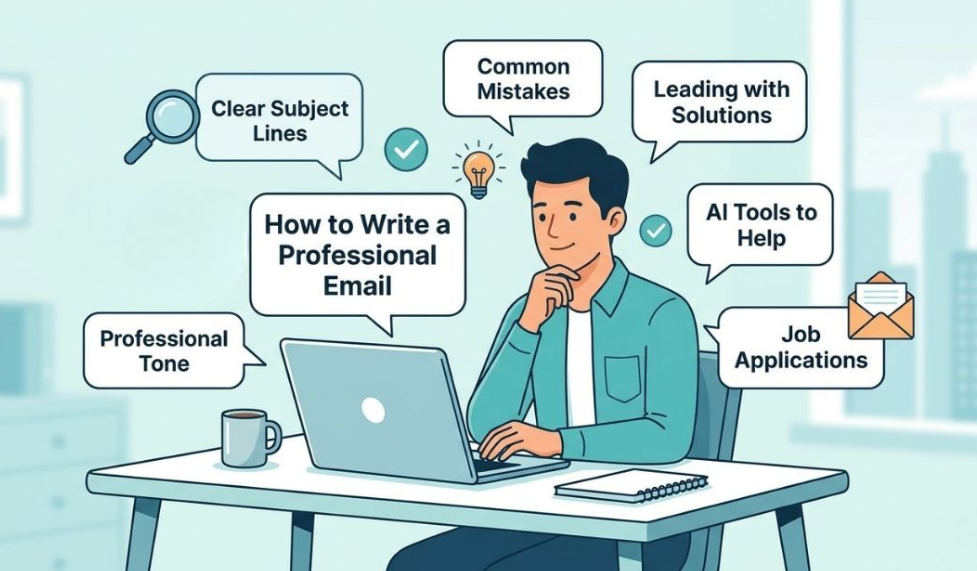
Email Writing Secrets Every Professional Should Know
Email has become one of the most important communication tools in the modern professional world. Whether you are communicating with clients, applying for jobs, coordinating projects, managing teams, or handling customer relationships, email plays a major role in daily business communication. A well-written email can create opportunities, strengthen relationships, and improve productivity, while a poorly written message can damage credibility and create confusion.
In today’s digital workplace, professional communication skills are more valuable than ever. Strong email writing abilities help professionals stand out by creating clear, respectful, and impactful communication. Alongside traditional writing skills, many businesses and individuals are now using ai tools for email writing to improve efficiency and produce more polished emails in less time.
However, even with advanced technology, the fundamentals of effective email communication remain essential. Understanding the secrets behind professional email writing can help you communicate more confidently and successfully in every professional situation.
This article explores the most important email writing secrets every professional should know to improve communication, increase professionalism, and achieve better results.
Why Professional Email Writing Matters
Every email you send represents your personal or professional image. The way you structure your message, choose your words, and communicate your ideas influences how others perceive you.
Professional email writing matters because it helps:
- Create strong first impressions
- Improve workplace communication
- Build trust and credibility
- Increase productivity
- Avoid misunderstandings
- Strengthen professional relationships
- Improve response rates
Professionals who communicate clearly and respectfully are often viewed as more organized, capable, and reliable.
See also: The Evolution of Wearable Technology: From Fitness Trackers to Smartwatches
Secret #1: Start With a Clear Purpose
One of the biggest secrets to effective email writing is clarity of purpose. Before writing any email, understand exactly why you are sending it.
Ask yourself:
- What is the main objective?
- What information does the recipient need?
- What action do I expect from the reader?
Emails without a clear purpose often become confusing and ineffective.
When your goal is clear, your writing becomes more focused and professional.
Secret #2: Write Strong Subject Lines
The subject line determines whether your email gets opened quickly or ignored. A strong subject line immediately explains the purpose of the message.
Tips for Better Subject Lines
- Keep it short and specific
- Clearly describe the topic
- Avoid vague wording
- Use professional language
Good Examples
- Meeting Schedule Confirmation
- Project Update for Design Team
- Client Proposal Submission
- Interview Availability for Friday
Weak Examples
- Hello
- Important
- Need Help
- Quick Question
A professional subject line improves email visibility and communication efficiency.
Secret #3: Keep Emails Concise
Modern professionals receive large numbers of emails daily. Long and complicated messages often reduce attention and delay responses.
One of the most important email writing secrets is learning how to communicate clearly using fewer words.
Ways to Keep Emails Short
- Focus on one topic
- Remove unnecessary information
- Use simple language
- Break content into short paragraphs
- Avoid repeating points
Concise emails save time and improve readability.
Secret #4: Use Professional Greetings
The opening greeting sets the tone for the entire conversation. A respectful greeting immediately creates professionalism and courtesy.
Professional Greeting Examples
- Dear Mr. Mehta,
- Hello Sarah,
- Good Afternoon Team,
- Dear Hiring Manager,
The right greeting helps establish positive communication from the beginning.
Secret #5: Organize Information Clearly
Well-structured emails are easier to understand and respond to. Poor formatting can make important information difficult to read.
Smart Formatting Tips
- Use short paragraphs
- Leave spacing between sections
- Use bullet points when necessary
- Keep sentences clear and direct
Basic Email Structure
- Greeting
- Introduction
- Main message
- Call-to-action
- Professional closing
Clear organization improves communication effectiveness significantly.
Secret #6: Maintain a Professional Tone
Your tone influences how recipients emotionally react to your message. Even when discussing difficult topics, professionalism should remain consistent.
Professional Tone Tips
- Stay respectful
- Avoid emotional language
- Do not use slang
- Avoid excessive punctuation
- Use polite wording
Example
Instead of:
“Why didn’t you finish this yet??”
Write:
“I wanted to follow up regarding the project status.”
Professional communication creates better results and reduces unnecessary conflict.
Secret #7: Make Your Request Clear
Every email should clearly explain what action is required from the recipient.
Examples of Clear Requests
- Please review the attached document.
- Kindly confirm your availability.
- Let me know your feedback by Monday.
- Please share the final report version.
Direct communication improves efficiency and reduces confusion.
Secret #8: Proofread Before Sending
Many professionals underestimate the importance of proofreading. Even small mistakes can affect credibility and professionalism.
Before sending, check for:
- Grammar mistakes
- Spelling errors
- Incorrect names
- Missing attachments
- Unclear wording
Reading your email carefully helps avoid embarrassing mistakes.
Today, many professionals rely on ai email writing tools to improve grammar, optimize tone, and refine sentence structure. These tools can quickly identify issues and improve communication quality.
Secret #9: Personalize Your Emails
Generic emails often feel cold and unprofessional. Personalization helps build stronger relationships and improve engagement.
Ways to Personalize Emails
- Use the recipient’s name
- Mention previous discussions
- Reference specific details
- Write naturally and sincerely
Personalized communication demonstrates effort and professionalism.
Secret #10: Learn the Art of Follow-Ups
Following up professionally is another important communication skill. Sometimes people miss emails because of busy schedules, not because they are ignoring you.
Effective Follow-Up Tips
- Remain polite
- Keep the message brief
- Mention the previous email
- Clearly restate the purpose
Example
“I wanted to follow up regarding my previous email about the proposal review. Please let me know your thoughts when convenient.”
Professional follow-ups show responsibility and persistence without sounding aggressive.
Secret #11: Use Positive Language
Positive communication creates a better professional atmosphere and encourages cooperation.
Negative Example
“You sent the wrong document.”
Positive Example
“Please send the updated document version when available.”
Constructive wording helps maintain professionalism even during corrections or disagreements.
Secret #12: Understand Email Etiquette
Good email etiquette is a critical part of professional communication.
Important Email Etiquette Rules
- Respond promptly
- Respect the recipient’s time
- Avoid unnecessary “Reply All” responses
- Use professional sign-offs
- Thank people when appropriate
Strong etiquette improves workplace relationships and communication culture.
Secret #13: Adapt Your Writing Style
Different situations require different communication styles.
Common Types of Professional Emails
Business Emails
Used for meetings, updates, and project coordination.
Job Application Emails
Require formal language and careful presentation.
Customer Support Emails
Need empathy, patience, and clarity.
Networking Emails
Focus on relationship-building and professionalism.
Adapting your tone and structure based on context improves communication effectiveness.
Secret #14: Use AI as a Support Tool
Artificial intelligence is transforming professional communication. Many professionals now use ai tools for email writing to improve productivity and save time.
Modern ai email writing tools can assist with:
- Grammar correction
- Tone adjustments
- Draft generation
- Sentence improvement
- Subject line suggestions
- Email summarization
These tools are especially useful for professionals handling large volumes of emails daily.
However, AI should support communication rather than replace human judgment. Personalization, emotional intelligence, and context still require human understanding.
The best results come from combining professional communication skills with intelligent AI assistance.
Secret #15: Build Confidence Through Better Communication
Professionals who communicate clearly often appear more confident and capable. Strong email writing skills improve confidence because they help you express ideas effectively.
Good communication supports:
- Career growth
- Leadership development
- Client relationships
- Team collaboration
- Networking opportunities
Confidence in communication can positively influence every area of professional life.
Remote Work Has Increased the Importance of Email Skills
Remote and hybrid work environments rely heavily on digital communication. In many organizations, emails now replace face-to-face discussions.
Strong email writing skills help remote professionals:
- Coordinate projects clearly
- Reduce misunderstandings
- Improve productivity
- Strengthen collaboration
- Maintain professional trust
Digital communication has become essential for modern workplace success.
How to Continuously Improve Email Writing Skills
Professional communication improves with regular practice and awareness.
Practical Improvement Strategies
Read Professional Emails
Observe how experienced professionals communicate.
Practice Writing Regularly
Consistent writing improves clarity and confidence.
Learn Communication Techniques
Business communication skills improve professional performance.
Use AI Tools Carefully
AI can improve efficiency, but human review remains important.
Review Sent Emails
Analyze what works well and identify areas for improvement.
Over time, these habits can significantly improve communication effectiveness.
The Future of Professional Email Communication
Technology will continue transforming professional communication through automation and artificial intelligence. However, the core principles of effective email writing will remain timeless.
These principles include:
- Clarity
- Respect
- Professionalism
- Conciseness
- Purpose
Professionals who master these fundamentals while effectively using ai email writing tools will continue to stand out in the evolving digital workplace.
Conclusion
Professional email writing is one of the most valuable communication skills in today’s business world. Every email reflects your professionalism, communication ability, and attention to detail.
By understanding important email writing secrets such as clear structure, concise messaging, professional tone, personalization, and effective follow-ups, you can dramatically improve communication quality and professional relationships.
At the same time, modern ai tools for email writing are helping professionals communicate faster and more efficiently than ever before. When combined with strong communication fundamentals, these tools can significantly improve productivity and professionalism.
Mastering professional email writing is not just about sending messages. It is about building trust, improving collaboration, and communicating with confidence in every professional interaction.