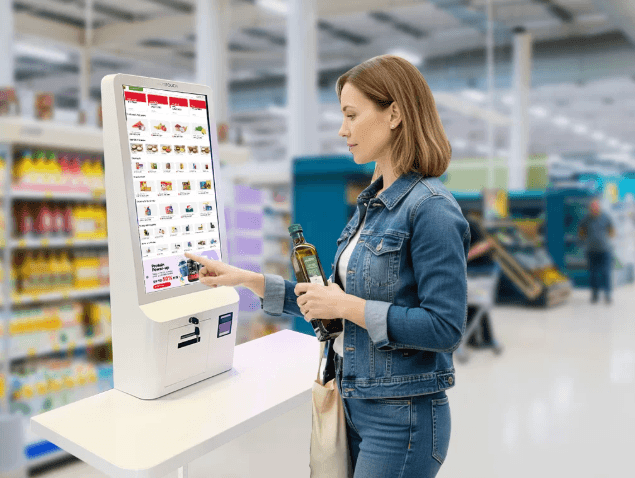
How Self-Checkout Kiosks Are Reducing Wait Times and Increasing Revenue
Retail has been undergoing a quiet revolution, and it’s happening right at the checkout counter. Self-checkout kiosks have moved from novelty to necessity for many retailers — and the data behind their adoption tells a compelling story about reduced wait times, happier customers, and healthier bottom lines.
If you’ve been on the fence about adding self-checkout to your store, this breakdown of the real-world benefits might be exactly what you need to make the call.
The Wait Time Problem — And Why It Costs You Money
Long checkout lines are one of the most cited reasons customers choose to shop elsewhere — or abandon a full cart altogether. Research consistently shows that shoppers are willing to walk away from a purchase if the wait feels too long. In grocery, pharmacy, and convenience retail especially, time-sensitive customers won’t tolerate inefficiency.
Every abandoned cart is lost revenue. And beyond the immediate sale, poor checkout experiences damage brand perception and reduce the likelihood of repeat visits. The cost of a slow checkout isn’t just measured in single transactions — it compounds over time.
How Self-Checkout Directly Reduces Wait Times
Self-checkout kiosks expand your checkout capacity without requiring additional staff at every terminal. Instead of five staffed registers, you might run three staffed lanes and eight self-checkout stations — all overseen by two employees. That’s dramatically more throughput at a fraction of the labor cost.
Customers with smaller baskets — the most time-conscious shoppers — move through self-checkout significantly faster than traditional lanes. This also frees up staffed lanes for larger transactions, customers who need assistance, or those who simply prefer a human interaction. The result is a naturally segmented, efficient checkout flow that works better for everyone.
The Revenue Connection
Reduced wait times translate directly to higher transaction volumes during peak hours. More customers through the door — and through checkout — means more revenue per hour of operation. But the revenue impact of self-checkout goes deeper than throughput.
Self-checkout kiosks can be configured to display upsell prompts, suggest add-ons, or promote loyalty program enrollment right at the point of purchase. A well-designed kiosk experience is actually a sales tool, not just a transaction processor. These digital touchpoints can drive incremental revenue that a traditional cashier interaction might miss.
Labor Optimization Without Sacrificing Service
One of the biggest financial advantages of self-checkout is labor efficiency. Retailers don’t need to eliminate staff — they can redeploy them. Team members freed from operating a register can assist customers on the floor, manage restocking, or handle customer service issues that genuinely benefit from a human touch. This improves the overall in-store experience while keeping payroll manageable.
Customer Autonomy and Satisfaction
Many shoppers simply prefer self-checkout — it gives them control over the pace of their transaction and eliminates the social friction of interacting with a cashier when they’re in a hurry. This autonomy is particularly appealing to younger demographics who are comfortable with self-service technology.
When customers feel in control of their experience, satisfaction scores go up. And satisfied customers come back.
Addressing the Concerns
Critics of self-checkout often point to two issues: technical frustration (the dreaded ‘unexpected item in bagging area’) and loss prevention risk. Modern kiosk systems have significantly improved on both fronts. Smarter weight sensors, clearer UI design, and better exception handling have reduced error rates. And loss prevention integrations — including AI-powered camera systems — have made self-checkout more secure than ever.
See also: How to Improve Business Communication
Is Self-Checkout Right for Your Store?
Self-checkout works best in environments with moderate-to-high transaction volume, a product mix that doesn’t require extensive staff knowledge, and customers who are comfortable with technology. If those conditions fit your store, the investment in self-checkout kiosks is very likely to pay for itself — in reduced wait times, improved customer satisfaction, and stronger revenue performance.