
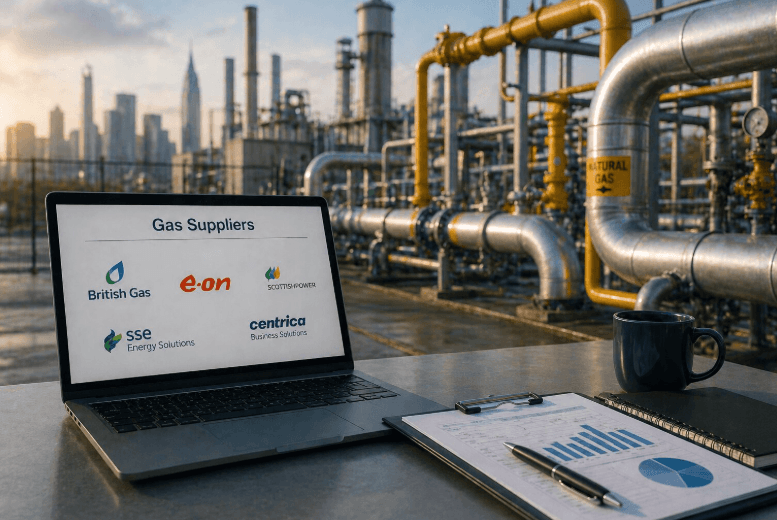
How UK Businesses Can Save Money by Switching Business Gas Suppliers
Every business in the UK that uses gas for heating, cooking, manufacturing, or operational needs is paying a rate that was agreed upon at some point in the past. For many businesses, that rate has never been properly reviewed. Energy markets shift, supplier offers change, and businesses that stick with the same gas contract for years often end up paying significantly more than they should.
Understanding what you are actually being charged and what alternatives exist is the first step toward meaningful cost reduction. Businesses that want to take control of their energy spend can compare quotes across multiple suppliers through a dedicated business gas comparison platform, which presents available rates side by side so that identifying a better deal does not require contacting each supplier individually.
How Business Gas Pricing Actually Works
Business gas contracts are structured differently from domestic ones. Suppliers price their offerings based on factors including consumption volume, the length of the contract, the business’s credit profile, and the current wholesale gas market. Because businesses typically consume more gas than households, they often have more bargaining power when it comes to negotiating rates, though many never exercise it.
Contracts can be fixed, floating, or flexible, and each structure carries different levels of price certainty and risk. A fixed-rate contract locks in a price for the duration of the agreement, protecting against market increases. A flexible contract allows the business to buy gas at different times and benefit from price dips, but it requires more active management. Most small and medium-sized businesses do well with a fixed-rate contract because it makes budgeting straightforward and removes exposure to sudden price spikes.
Why Businesses Stay on the Wrong Tariff
The most common reason businesses overpay for gas is inertia. When a contract ends, many suppliers will roll customers onto a deemed or out-of-contract rate, which is typically far higher than a properly negotiated tariff. These rollover rates can be significantly above the market average, yet businesses often remain on them for months or even years simply because no one checks.
Another factor is complexity. Business energy procurement can feel complicated, especially for operators managing multiple sites or those unfamiliar with how supplier markets work. Many business owners assume the process of switching is time-consuming or risky, when in reality a comparison platform can handle most of the process on their behalf.
What the Switching Process Involves
Switching business gas suppliers is more straightforward than most businesses assume. The process typically starts with providing your current contract details, including your annual consumption figure and contract end date. A comparison is then run across available suppliers to find the most competitive rates that match your usage profile and business needs.
Once a better deal is identified and accepted, the new supplier handles the transfer. There is no interruption to gas supply during a switch. The physical infrastructure remains unchanged; only the commercial relationship shifts. Most businesses can complete a switch within a few weeks, with some contracts available to start from the expiry of the existing one.
The Role of Energy Brokers and Comparison Platforms
Using a dedicated comparison service removes much of the guesswork from the process. Rather than contacting individual suppliers one by one and negotiating independently, a comparison service presents multiple offers simultaneously, making it straightforward to identify where savings are available.
Some platforms also manage the entire process end to end, from gathering quotes to handling supplier communication and paperwork. For small business owners without the time to manage energy procurement in detail, this kind of support can make a genuine difference.
Getting the Most From a Business Gas Review
Timing matters when switching. Contracts typically have a notice period of anywhere from 30 to 90 days before the end date. Setting a reminder three to four months ahead of the renewal date gives sufficient time to gather quotes, compare options, and make an informed decision.
Businesses with multiple premises should also consider whether consolidating gas supply under a single supplier contract could unlock better volume-based rates. Reviewing all sites together often produces better outcomes than managing each independently.
See also: How to Improve Business Communication
Frequently Asked Questions
Q: Can my business switch gas suppliers while still under contract? A: Switching mid-contract is possible but usually triggers an exit fee. In some cases, the savings from switching to a lower rate outweigh the exit fee over the remaining period, but this should be calculated before making a decision.
Q: How long does a business gas contract typically last? A: Most business gas contracts run for one to three years, though some suppliers offer shorter or longer terms. The contract length affects the rate, with longer commitments sometimes offering more stability but less flexibility.
Q: What information do I need to compare business gas suppliers? A: You will typically need your current gas supplier name, annual consumption in kilowatt-hours, your business postcode, and your contract renewal date. Having a recent bill to hand makes the process quicker.
Q: Will switching gas suppliers affect supply to my premises? A: No. The gas supply itself is managed through the same national pipeline infrastructure regardless of which supplier you are with commercially. Switching does not cause any interruption to service.
Q: Is it worth comparing if my consumption is relatively low? A: Yes. Even businesses with modest gas usage can benefit from switching to a more competitive rate. Comparison tools cover this segment of the market and can surface meaningful savings regardless of size.