Automated Visual Inspection in Manufacturing: Enhancing Quality, Speed, and Precision
In modern production environments, maintaining consistent product quality while meeting high production demands is a major challenge. This is where automated visual inspection in manufacturing is transforming the way factories operate. By combining advanced cameras, machine vision systems, and artificial intelligence, automated inspection solutions allow manufacturers to detect defects, maintain quality standards, and streamline operations with greater accuracy than traditional manual methods.
Manufacturers across industries—from electronics and automotive to pharmaceuticals and packaging—are increasingly adopting automated visual inspection systems to improve efficiency and ensure that every product meets strict quality standards.
What Is Automated Visual Inspection in Manufacturing?
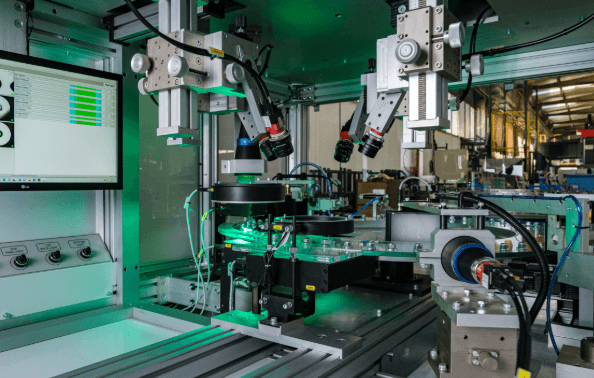
Automated visual inspection refers to the use of machine vision technology to automatically inspect products during the manufacturing process. High-resolution cameras capture images of products as they move along the production line, and software algorithms analyze these images to identify defects, inconsistencies, or deviations from quality specifications.
Unlike manual inspection, which relies on human observation and can be inconsistent, automated systems provide consistent and precise inspection results. They operate continuously and can inspect hundreds or even thousands of items per minute.
Typical systems include:
- High-resolution cameras
- Industrial lighting systems
- Machine vision software
- Artificial intelligence or deep learning algorithms
- Integration with production line equipment
Together, these components enable real-time monitoring and rapid detection of defects.
Why Manufacturers Are Adopting Automated Visual Inspection
1. Improved Product Quality
Quality control is critical in manufacturing. Automated inspection systems identify even the smallest defects—scratches, misalignments, missing components, or surface irregularities—that may be difficult for the human eye to detect.
By identifying defects early in the production process, manufacturers can reduce defective products and maintain high quality standards.
2. Increased Production Efficiency
Manual inspection can slow down production lines, especially in high-volume manufacturing. Automated visual inspection systems operate at high speeds and can inspect products instantly without interrupting workflow.
This ensures that quality checks do not become a bottleneck in production.
3. Reduced Operational Costs
While the initial investment in automated inspection technology may seem significant, the long-term savings are substantial. Companies can reduce labor costs, minimize waste, and avoid costly product recalls.
Automated systems also help reduce downtime by identifying issues in production before they escalate into larger problems.
4. Consistency and Accuracy
Human inspection can vary depending on fatigue, attention levels, or subjective judgment. Automated visual inspection systems deliver consistent results every time, ensuring uniform quality standards across all production batches.
Key Applications in Manufacturing
Automated visual inspection is used in many stages of manufacturing. Some common applications include:
Surface Defect Detection
Systems inspect products for scratches, dents, cracks, or discoloration on surfaces. This is common in industries like automotive parts manufacturing, glass production, and metal fabrication.
Assembly Verification
In electronics and mechanical manufacturing, automated inspection verifies that components are assembled correctly. Missing screws, misplaced connectors, or incorrect parts can be detected instantly.
Packaging Inspection
In the packaging industry, automated systems check labels, barcodes, seals, and packaging integrity. This ensures that products meet regulatory requirements and brand standards.
Dimensional Measurement
Machine vision systems can measure product dimensions with high precision, ensuring that parts meet exact specifications.
The Role of Artificial Intelligence and Machine Learning
Recent advances in artificial intelligence have significantly improved automated visual inspection systems. Traditional machine vision systems relied on predefined rules to detect defects, but AI-powered systems can learn from large datasets and identify complex patterns.
This means that AI-driven inspection systems can:
- Detect subtle defects that traditional systems may miss
- Adapt to variations in products or materials
- Improve accuracy over time through continuous learning
AI-powered inspection solutions are especially useful in industries with complex products, such as semiconductor manufacturing or advanced electronics.
Integrating Automated Inspection with Smart Manufacturing
As factories move toward Industry 4.0, automated visual inspection systems are becoming part of larger smart manufacturing ecosystems. These systems integrate with production software, data analytics platforms, and IoT devices to create a fully connected production environment.
For example:
- Inspection data can be analyzed to identify recurring defects.
- Production lines can automatically adjust settings when defects are detected.
- Real-time dashboards can provide insights into quality performance.
This level of integration allows manufacturers to continuously improve production processes and reduce inefficiencies.
Challenges and Considerations
While automated visual inspection offers significant benefits, manufacturers must consider a few factors before implementation.
Initial Setup and Integration
Implementing inspection systems requires proper integration with existing production lines. Companies must ensure compatibility with machinery and software systems.
Training and Calibration
Machine vision systems must be properly trained and calibrated to recognize acceptable product variations and identify true defects.
Data Management
Automated systems generate large amounts of visual data. Proper storage and analysis strategies are necessary to maximize the value of this information.
Despite these challenges, the long-term advantages far outweigh the initial implementation effort.
The Future of Automated Visual Inspection
The future of automated visual inspection in manufacturing is closely tied to advancements in AI, robotics, and smart factories. Emerging technologies will continue to enhance inspection capabilities and expand their applications.
Future systems may include:
- AI-powered predictive quality control
- 3D visual inspection systems
- Integration with collaborative robots
- Real-time defect prediction and prevention
These innovations will further reduce errors, increase efficiency, and support highly automated production environments.
See also: Bringing Natural Light into Workspaces with Commercial Rooflights
Final Thoughts
As manufacturing becomes more complex and competitive, quality control must evolve alongside production technologies. Automated visual inspection in manufacturing offers a powerful solution for ensuring consistent product quality while maintaining high production speeds.
By replacing manual inspection with intelligent machine vision systems, manufacturers can reduce defects, improve operational efficiency, and gain valuable insights into their production processes. In an industry where precision and reliability are essential, automated visual inspection is quickly becoming a cornerstone of modern manufacturing operations.