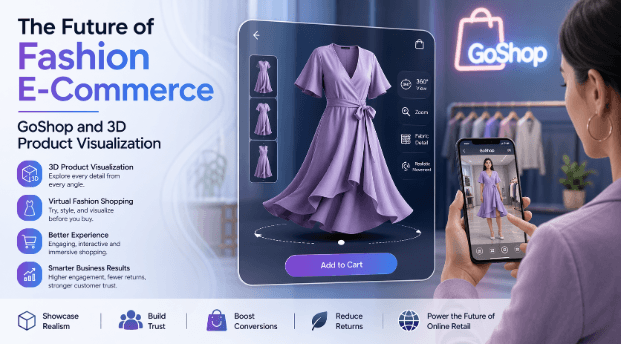
The Future of Fashion E-Commerce: GoShop and 3D Product Visualization
Fashion Retail Is Entering a More Interactive Era
Fashion e-commerce has moved far beyond static product pages and flat catalog images. Today’s shoppers expect richer digital experiences that help them feel confident before they click buy. They want to rotate products, inspect texture, imagine movement, and understand fit with less guesswork. That shift is changing how brands present apparel online, and it is opening the door to platforms built for immersive digital retail.
GoShop is part of this next phase. By helping brands showcase and sell 3D garments online, it turns ordinary browsing into a more engaging customer journey. In a market shaped by GoShop, virtual fashion shopping, 3D product visualization, and online retail are becoming closely connected. Together, they give brands a way to reduce friction, increase product appeal, and meet rising customer expectations in a competitive digital space at every stage.
The fashion industry has always depended on presentation. In physical stores, shoppers can touch fabric, view items from different angles, and imagine how a piece may work in real life. Online stores have traditionally struggled to recreate that confidence. Standard photos help, but they often leave important questions unanswered. This is why more retailers are looking toward 3D tools that make digital browsing feel more tangible.
Why Traditional Product Pages No Longer Feel Enough
For years, fashion brands relied on image galleries, size charts, and short descriptions to support online sales. Those tools still matter, but they are no longer enough on their own. Consumers are more selective, more visually driven, and more likely to compare multiple stores before making a purchase. If a product page feels incomplete, they move on quickly.
One major challenge is uncertainty. Buyers often wonder whether a garment will drape well, whether details are accurately shown, or whether the item looks premium enough for the price. When shoppers cannot answer these questions, hesitation grows. That hesitation affects conversion rates and increases the chance of abandoned carts.
Another issue is return volume. Fashion returns often happen because expectation and reality do not match. A more interactive shopping experience can help narrow that gap. When product visualization becomes more realistic, customers can make choices with greater confidence.
This is where digital presentation stops being a nice extra and starts becoming a strategic advantage. Brands that improve product understanding tend to create smoother purchase paths, stronger engagement, and better customer trust.
How GoShop Changes the Digital Storefront
GoShop gives fashion brands a more dynamic way to present garments online. Instead of depending only on traditional photos, brands can display 3D apparel that shoppers can explore interactively. This brings movement, detail, and realism into the buying journey in ways that static visuals cannot fully deliver.
The value of this approach is practical as well as visual. A well-built 3D experience helps shoppers inspect cuts, seams, silhouettes, and styling details from multiple viewpoints. It encourages longer interaction on product pages and makes the storefront feel modern, responsive, and memorable.
For brands, the benefits extend beyond appearance:
- Products feel more premium and informative
- Shoppers spend more time engaging with items
- Digital catalogs become more distinctive
- Purchase decisions can happen with less uncertainty
GoShop also supports a broader shift in how consumers experience fashion online. People no longer want to simply scroll through products. They want to explore them. That difference matters because exploration creates emotional investment, and emotional investment often leads to stronger conversion.
See also: Top Benefits of Hiring Experienced HVAC Contractors for Your Needs
The Role of 3D Product Visualization in Building Trust
Trust remains one of the most valuable drivers in digital commerce, especially in fashion. Customers are being asked to purchase something personal without seeing it in person. The more clearly a product is presented, the easier it becomes to build that trust.
3D product visualization improves clarity. It allows shoppers to view garments from multiple angles, zoom in on construction details, and gain a better sense of design quality. This richer product understanding can make customers feel that the brand is being transparent rather than relying on polished but limited imagery.
There is also an important psychological factor at work. When users can interact with a product, they feel more in control of the shopping process. That sense of control can reduce doubt and improve satisfaction even before the order is placed.
For newer fashion labels, this matters even more. Established brands may already have reputation on their side, but growing labels often need stronger digital storytelling to earn trust quickly. Interactive visualization helps close that gap by letting the product speak more clearly for itself.
Virtual Fashion Shopping as a Customer Experience Strategy
Virtual fashion shopping is not just a trend linked to novelty. It is becoming a smart customer experience strategy for brands that want to stand out in a crowded market. Shoppers are drawn to experiences that feel intuitive, informative, and enjoyable. When an online store delivers those qualities, it becomes easier to remember and more likely to attract repeat visits.
A virtual shopping environment can also support different kinds of buyers. Some shoppers are fast decision-makers, while others need more reassurance. Interactive garment displays serve both groups. They create quick understanding for decisive customers and deeper context for careful ones.
From a brand perspective, this kind of experience can strengthen several areas at once. It can improve engagement metrics, help communicate product quality, and create a more polished identity across digital channels. It can also make product launches feel more exciting, especially when brands want to highlight craftsmanship, innovation, or exclusive collections.
As consumer attention becomes harder to win, memorable experiences are no longer optional. They are part of how fashion businesses stay visible and relevant in the evolving world of online retail.
From Better Merchandising to Smarter Business Results
Immersive presentation also improves the way brands merchandise collections. A single garment can be shown in a cleaner, more flexible format that supports launches, seasonal edits, and cross-channel campaigns. Teams can highlight texture, structure, and styling potential without relying on endless image variations.
This can support stronger performance in several practical ways. Product pages may hold attention longer. Marketing campaigns can send traffic to richer landing pages. Customers may feel more certain about premium pricing when details are easier to inspect. Over time, those small gains can add up to stronger revenue efficiency.
For growing labels, this creates an advantage that is not limited to design. It influences how the brand is perceived. A polished interactive store signals innovation, care, and confidence. In digital commerce, presentation shapes credibility, and credibility shapes buying behavior.
It also gives merchandising teams more freedom to test presentation styles and learn which product interactions encourage stronger engagement across categories, audiences, and campaign moments.
Where Fashion Retail Moves Next
Fashion brands that want long-term digital growth should view immersive product presentation as part of core business strategy, not just visual decoration. The future of e-commerce will reward brands that reduce uncertainty, elevate presentation, and create product pages that actually help people decide.
GoShop fits that direction well because it aligns product storytelling with user behavior. Customers want clarity, realism, and interaction. Brands want stronger engagement, better differentiation, and more efficient selling environments. A 3D-first approach helps connect those goals.
The brands likely to win in the coming years will be the ones that understand a simple truth: online shoppers do not only buy products, they buy confidence. When a shopper feels informed, intrigued, and comfortable, the path to purchase becomes far smoother.
The future of fashion e-commerce is not about replacing creativity with technology. It is about using technology to present creativity more effectively. Platforms like GoShop are helping make that future more practical, more immersive, and more commercially powerful for brands ready to evolve.